 EN
EN


2011-14 Egyptian National Team: Egypt’s Worst Generation Ever?

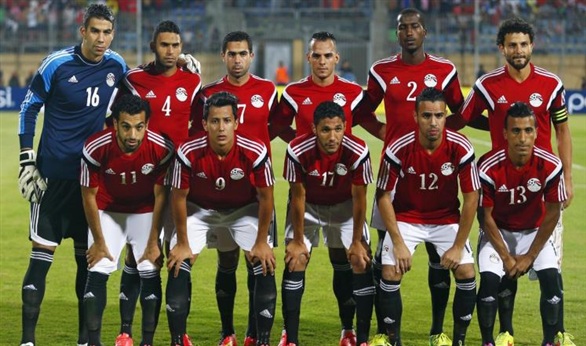
There have been a thousand excuses thrown out: Some want to blame the Muslim Brotherhood for all the national team’s woes, while others continue to blame the instability of the domestic league from 2011-13 as a reason for poor chemistry and a lack of talent in the national team pool. Still others blame the coaching staff, for incompetent tactics, poor player selection, or a variety of others perceived flaws.
And while all these reasons may possess some varying degrees of merit, the question must be asked: Is the current generation of Pharaohs simply the worst generation ever, or at least in the last couple decades? Given that I have only been watching the Egyptian national team for roughly 15 years or so, I’m in no position to answer the former question, though I am confident the answer is no. The latter question though, is worth exploring.
It is a common concept in football that all teams, whether club or international, have their highs and lows. Just think back to the France team that won the 1998 World Cup and Euro 2000, only to finish last in its group with a single point at the 2002 World Cup. Or more recently Spain, who dominated Euro 2008, the 2010 World Cup & Euro 2012, before becoming the first team to be eliminated at the 2014 World Cup. It’s Newton’s law: what goes up must come down, and in football, it often comes down in a big way.
While Egypt’s highs haven’t been quite as grand as France or Spain’s, they’ve been fairly impressive by most national teams’ standards. Under Hassan Shehata, the team spectacularly won three Africa Cup of Nations in a row from 2006-10, and missed out on the 2010 World Cup by the narrowest of margins. So naturally, as the golden generation, which brought all this success to Egypt, began to move into retirement, some difficulty in transition was to be expected.
The problem that began developing after Shehata stepped down was that as star players moved into retirement or out of the national team, they were not replaced by incoming talent. Under Shehata, Egypt was always able to count on a star forward. When Mido’s star was being to dim, Shehata found a new star in Amr Zaki. When Zaki’s discipline issues got the best of him and derailed his career, Shehata found Gedo. And alongside them, he was able to Mohamed Zidan into the fold and get the best out of Emad Meteb.
Under Bob Bradley and Shawky Gharib, the quality of Egypt’s frontmen has dropped markedly. This was an issue we highlighted in great detail here at KingFut in January 2013, and as we approach the end of 2014, we are hardly closer to a solution. Some new faces, like Khaled Kamar, Amr Gamal and Bassem Morsi have appeared as of late, but none have quite staked their claim to start for the national team on a regular basis.
Further up the field, the replacements have also been imperfect. In defense, Hany Said & Wael Gomaa, even towards the end of their careers, were rocks in defense, and their ability allowed the midfield to be able to attack with confidence. While players like Rami Rabia & Ahmed Hegazy were once thought to be the perfect replacements for Egypt’s old guardians, their injury problems have left Egypt with mediocre centre-backs like Ali Gabr, Mohamed Naguib & Shawky El Said, to name a few.
In midfield, Egypt once again has found many candidates to take up the places of the old guard, but few permanent replacements. Guys like Walid Soliman, Amr El Sulaya and Ibrahim Salah have all picked up a decent amount of caps in recent years, and have shown a good amount of ability, but one would be hard pressed to say they’ve filled the shoes of Mohamed Barakat, Ahmed Hassan and Mohamed Abou-Treika.
Yet, it would be inaccurate to say that Egyptian soccer has completely regressed since the end of Egypt’s golden generation, or that it’s been nothing but failures since Shehata stepped down. For starters, Egyptian soccer was gifted with its most talented player ever, Mohamed Salah, whose successes have been a bright spot for the Egyptian national team and for Egyptian soccer in general. At age 22, Salah’s best days remain ahead of him. His former FC Basel teammate, Mohamed El-Nenny, also continues to develop. Once thought to be a limited player with little more to offer than good passing, El-Nenny has added a powerful shot to his repertoire, improved his dribbling and developed into a decent tackler as well. At 22, he too will see his game develop in the coming years.
Beyond Egypt’s two star players is Egypt’s contingent of Portuguese league players. These include Aly Ghazal, Ramy Rabia, Ali Fathy, Mahmoud Ezzat, Saleh Gomaa, Ahmed Hassan Koka and Shikabala. While some of these guys have not experienced much success at all (looking at you, Shikabala), others are genuinely making progress and, with a competent coach, should be able to fill the shoes of their predecessors ably in the coming years.
And then there’s the guys who’ve taken at least a couple steps back, either due to injury or issues with management, but no doubt remain as talented as they once were. These include Ahmed Hegazy and Kahraba, and Ahmed Hamoudi could be included here as well, though his issue has been more about acclimation than anything else. None of these guys have a clear road to success, but they’ve shown in the past that they’ve got national team quality and can deliver if called upon.
More than ever before, Egyptian players are venturing outside of Egypt to ply their trade, and that can only be good for their development and for increasing foreign investment by leagues with much better football infrastructure than the kind we possess in Egypt.
Though the golden years of Egyptian football blessed Egyptian fans with some great football, silverware and legendary players, many will agree that youth development was largely neglected during this time, and Egypt contributed the fewest players to Europe’s top leagues relative to its standing among African nations. Though the reversal of this trend may be due in part to the instability of the domestic league in recent years, it still is a very healthy development for the future of Egyptian football.
Many of the reasons cited earlier are legitimate reasons for why Egyptian football is where it is. Egypt’s instability in recent years undoubtedly retarded the progress Bob Bradley was able to make as Egypt’s national team coach, and some might argue that his achievements considering the hardships he had to endure make his tenure much less of a failure than many have painted it after the 6-1 defeat vs Ghana.
Shawky Gharib’s poor tenure over the last year is another legitimate reason. Whereas Bob Bradley at least allowed us to cross some names off the list of prospective candidates for the national team, and was instrumental in aiding the progress of other key players (think El-Neny, Salah & Hegazy, just to name three), Gharib largely stuck to domestic league players, and inexplicably avoided the more talented Europe-based players for his most important games. This only served to further stagnate the development of the national team.
Though it will be quite a while before Egypt gets to participate in competitive international play again, the next manager of the Egyptian national team will have the opportunity to mold a young team filled with talent into champions. There is still much to be learned about a number of prospects, and whether they have what it takes to cut it at the highest level, but with consistent testing and equal treatment for all players, the next manager should have plenty of time to thoroughly examine the players at his disposal.
Is the current generation of Pharaohs the worst generation in the last couple decades? They may not be at the level of the golden generation that came before them, but they certainly have too much talent and potential to be the worst. Rather, I would argue they’ve been the most misfortunate, and with the right environment can relive the glories of past national teams. Hope can be a killer for an Egyptian national team fan, but with the current crop of players, there’s cause for cautious optimism.