 EN
EN


Africa seed index raises bigger yield hopes for farmers

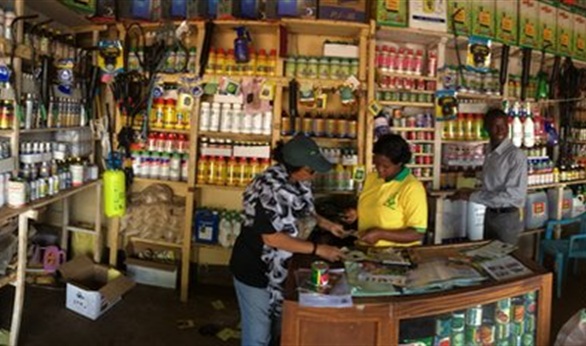
An initiative has been launched to help improve smallholder farmers' access to a wider array of modern, more productive food crop varieties.
The African Seed Access Index (TASAI) monitors the state of the continent's seed sector and highlights problems that prevent seeds reaching farmers.
Organisers hope the scheme will shake off "decades of complacent government seed monopolies".
Uganda, Zimbabwe, South Africa and Kenya featured in the first assessment.
Changing landscape
Edward Mabaya, principal investigator for TASAI, said that food security was a key factor for African agriculture, which is dominated by smallholder farmers.
"Traditionally, the seed sectors have been dominated by government monopolies during the 1970s and 1980s but this changed in the 1990s," he said.
"Most of the systems were liberalised and this gave way to a new breed of domestic and multinational companies coming into the sector."
But this transition generated a number of challenges, such as ensuring the complex supply chains in the seed sector delivered the appropriate technologies to smallholder farmers.
Dr Mabaya told BBC News: "We thought that we needed an instrument that allowed you to run a very quick diagnostic test across the sector in a way that informed stakeholders, such as decision-makers and investors.
"The seed delivery system is only as strong as its weakest link, so if there is anyone along that value chain not doing their job or there is a bottleneck then seed does not find its way to the small farmer."
The initiative - a partnership between Cornell University in the US and Market Matters, a development organisation - hopes that it will deliver results to the farm gate.
Dr Mabaya said: "We know that there are some farmers who are not getting access to food crop seeds, and if they are then they are often getting varieties that are 30 or 40 years old.
"So we are coming in with this problem in mind and working our way upstream to identify the problems that may be causing this weak flow of appropriate technologies reaching farmers.
"Ultimately the result will be better flow, which will result in better technology, better competition and quality, lower prices and a wider range of choices for the farmer."